


A blunt observation: most SaaS and Standard Software are polished compromises. It’s built for the average customer, so every organization ends up bending its processes, language, and user experience to fit someone else’s idea of “best practice.” Shouldn’t we flip that model by combining AI driven app generation with low-code, so companies can build flexible, role based applications on top of the data sources they already trust in their existing SaaS or standard platforms.
Why this suddenly becomes possible
AI changes the economics of customization. What used to take months of analysis, development, and change requests can now be generated, validated, and iterated in a fraction of the time, and low code adds the control layer to keep it governable, maintainable, and safe. The result is not “a prototype” but a new way of delivering software that keeps adapting, instead of freezing your business inside a product roadmap.
SaaS should turn into a datasource plus APIs
Here’s the shift most vendors do not want to admit: with AI app generation, the user interface is no longer the product, it is just the skin. The durable value sits in the data, transactions, and APIs, while the experience layer becomes something you generate per role, per workflow, per context. SaaS does not disappear, it gets demoted: it becomes the infrastructure layer, while your organization owns the apps people actually use to get work done.
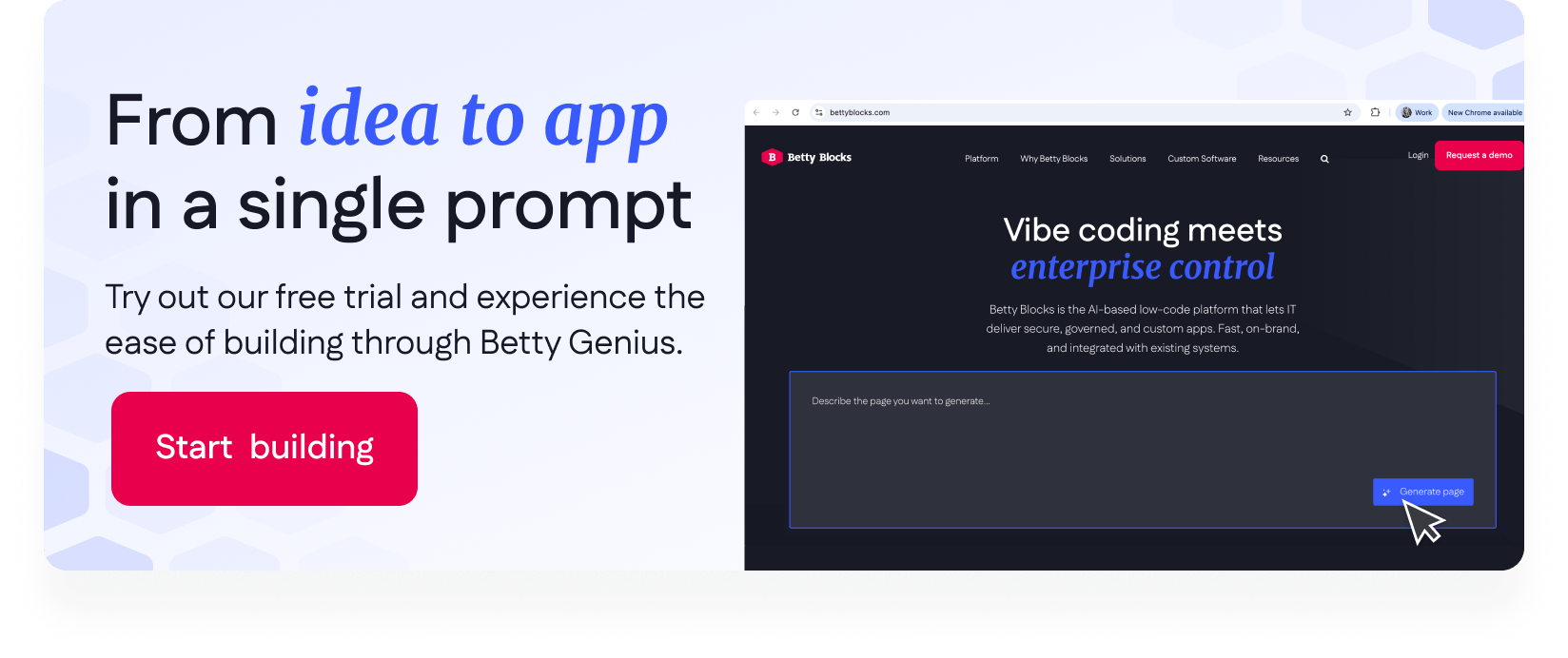
The benefits are immediate and hard to ignore
You reduce dependency on vendor updates, stop paying for features nobody uses, and deliver new apps faster than traditional development methods can even plan them. You also cut TCO by lowering change costs, shrinking the need for endless consultancy, and avoiding the typical mess of workarounds and shadow tooling that grows around rigid systems. Killing SaaS is not about ripping out your platforms, it is about taking back the experience layer and making software finally follow the business again.
